



OpenAI makes a big fuzz about AI safety. Meanwhile, they cannot even deploy their Sandbox for codex on Windows.


Since August. I have deployed a fix on my setup. It's not difficult. Safety first, only on osroadwarrior.info. 😺
Virtualize, don't sandbox AI
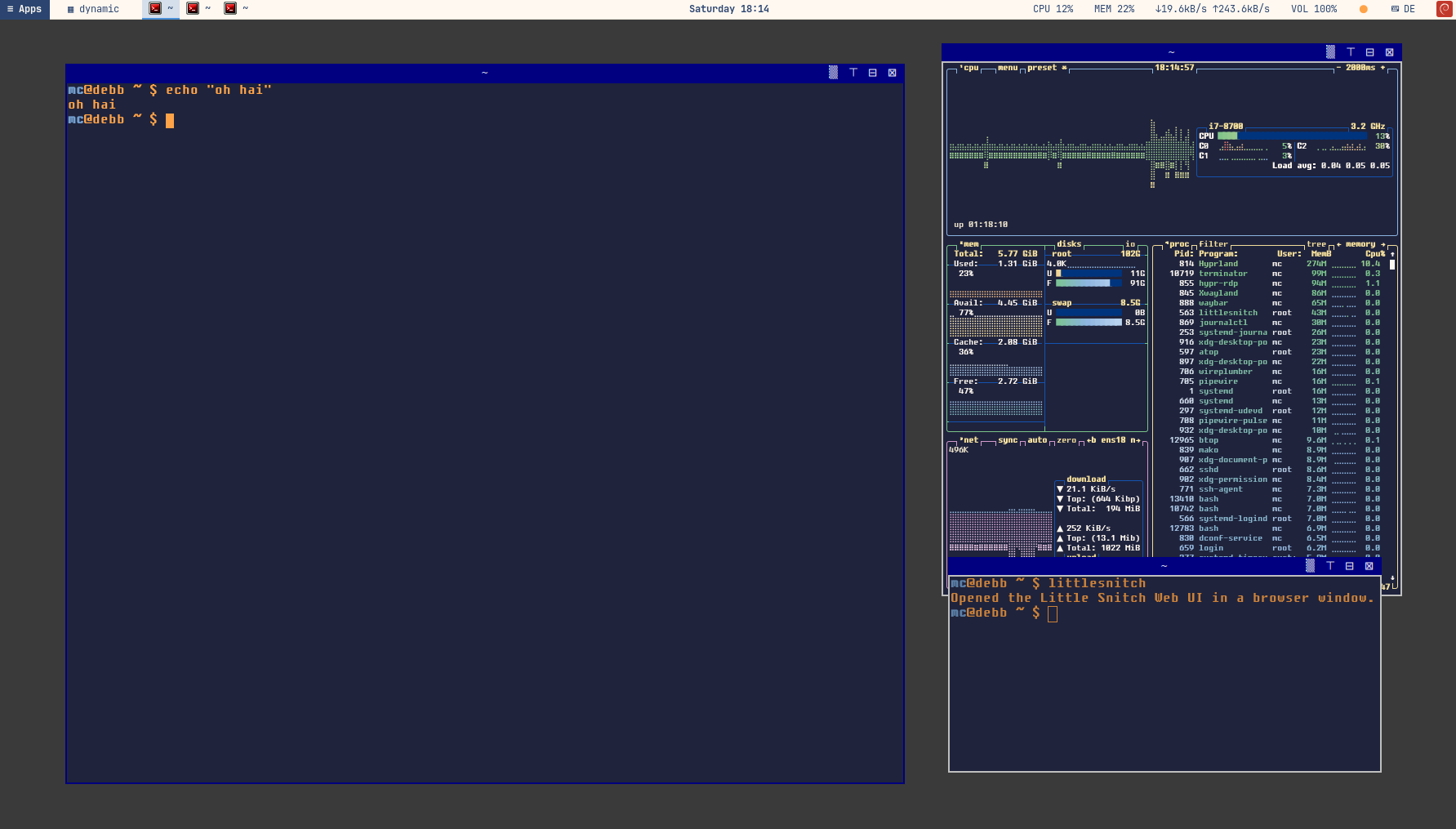
So I started building a low-footprint Linux, thin-client style.
Requirements:
- RDP (bitmap differential protocol, not h265 because I cannot attach a GPU to every VM guest on Proxmox or other hypervisor systems)
- compatible to RoyalTS (macOS and Windows)
- minimal desktop:
- low memory (max 900 MB for Desktop UI incl. services)
- low CPU (max 2-3% idle, 8-12% while busy)
- no laptop dependencies (no professional use cases for Linux on a laptop in 2026).
Means no bluetooth daemon, Avahi or display brightness widget in a remote VM. Simple. Minimal. - no bloat (we do not use random tools like Snap or Flatpak)
- Useful terminals
- no GPU terminals
- Terminator, Xfce Terminal
- Chromium, maybe Firefox with MCP AI automation
- AI agents
Not difficult to build. But... necessary.
Linux Mint and Wayland
 Clem
Clem
Rumor is that Linux Mint will release end of 2026, featuring Wayland. Sadly they chose to go for LXDE, which is not what I want to use going forwards.
My main thin-client setup 2025-2026 was Linux Mint, Xorg and Xrdp. The problem is: Xrdp doesn't work with Wayland.
Linux Mint has the advantage that they use low-footprint desktop tools. But LXDE? No.
Hypr-RDP
Someone wrote hypr-rdp, which ports IronRDP to Hyprland. That is a very good start. IronRDP is a rock solid Rust-based RDP server for Linux, which supports different protocols. Among them: ClearCodec.
RDP is distinct from VNC in many regards:
- it's a family of protocols, on Windows even with GDI specific channels
- it can use h264 (which is not very useful for text)
- needs a GPU or occupies more CPU than it should
- traditionally RDP has a bitmap compression protocol, which is ideal for terminal and text (websites included)
So I patched hypr-rdp to support ClearCodec, and added a couple of modifications to make it better:
- cursor and cursor-performance (hidden unless needed)
- limited it to 20Hz, 30 FPS (bandwidth efficiency)
- added window resizing (proportional to client change) logic
I optimized Hyprland's Mesa pipeline a little (LLVMpipe software ratserrize) and limited the threads. And voila: we are 90% there. Xrdp like.
 norandom
I decided to make it deployable with PyInfra which is a little fancier and faster than Ansible in 2026.
Debian Forky and Hyprland
Debian Forky ships an up2date version of Hyprland. Hyperland sees a lot of development, because it's funded for the next 3 years.
Debian Forky will be released in 2027, and be supported for years as well.
It's a sane combination, but sadly some folks in the dev team have US Republican opinions. I don't care. Ruby on Rails (a key developer of Omarchy Linux developed it, which funds Hyprland) is used by the CCC website, Metasploit, and many Web dev projects. But there is a cancel culture movement out there. Be warned.
Hyprland has some distinct advantages over Awesome WM or ion3. For once, it's an actual compositor. And it supports fractional scaling.
I added:
- custom layouts, golden ratio inspired (I did not have to rewrite the whole stack)
- theme switcher buttons for Terminator (custom themes)
- a keyboard layout switcher (and an
xsetkbmapalias for the dinosaurs among us) - a menu with applications
- a window list
- and a hybrid mode, so that by default I am not forced to rely on keyboard-first tiling. The dynamic window positions are remembered. RDP re-connects with differently sized clients can auto-resize the windows proportionally. This works hand in hand with RDP.
- extra buttons on the title bars of menus (Windows 3.11 inspired, with pinned-on-top and transparency switch)
And that's it. The little things in daily development activity.
VM settings = speed speed speed
I added performance improvements for heavy AI workloads. If you use claude or codex you can let them run in a /loop over night and optimize processes. Then reconnect via RDP in the morning and check the results.
Performance wise this should give you 10-15% extra over Debian defaults in the VM guest. I disabled some security stuff, which isn't needed. Check it out, all modular.